
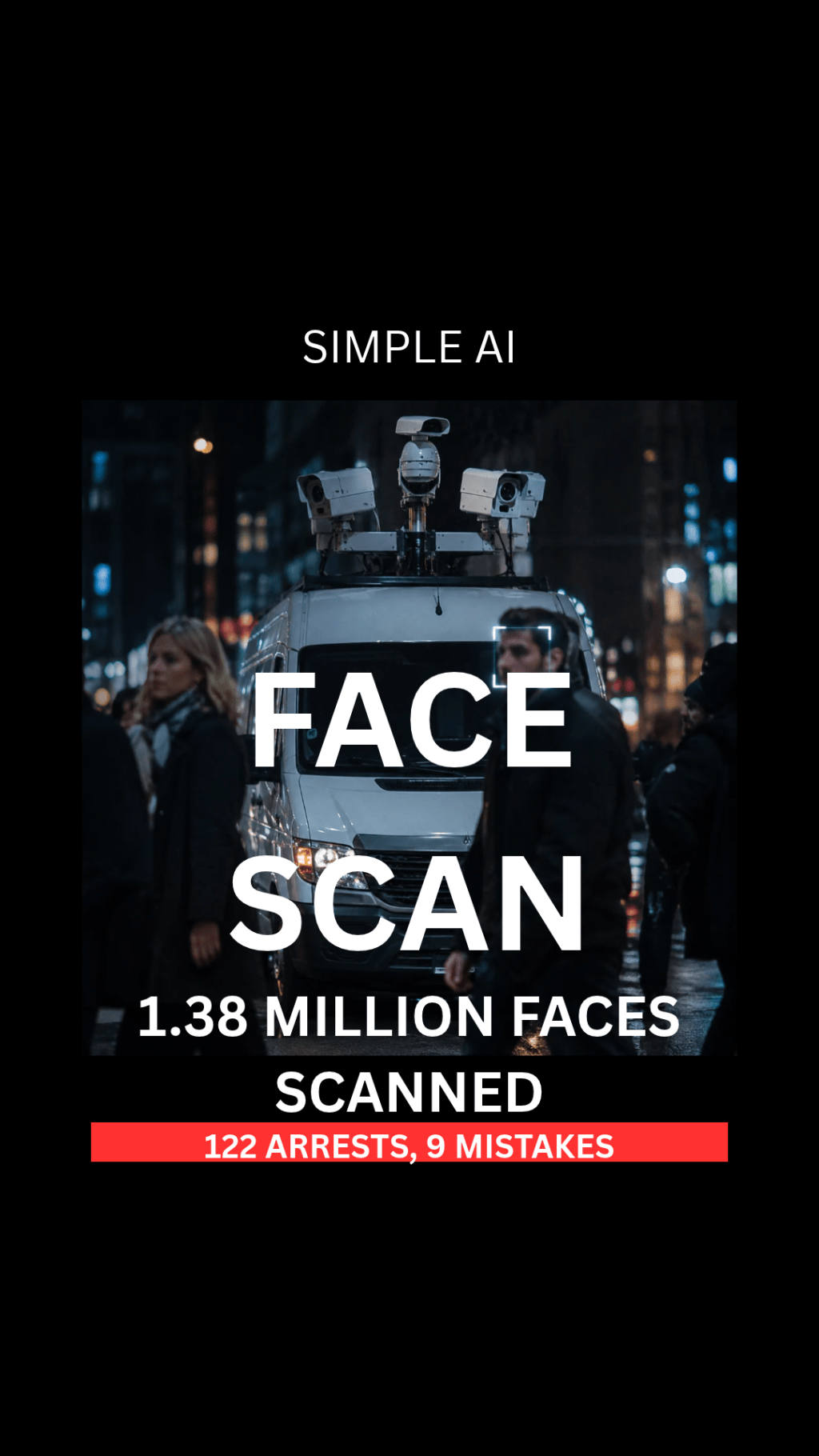
Police scanned 1.38 million faces. 122 arrests followed.
Western Australia Police ran cameras on marked vans for five months, scanning 1,380,882 faces across 100 deployments at 43 locations against a wanted list. The system contributed to 122 arrests, flagged 146 registered sex offenders, and found 10 missing people. But nine alerts were wrong — nine real people stopped and questioned. Police call that a 0.00065 percent error rate, dividing by every face scanned, not by alerts. The vans are now parked while police review the trial.
Storyline
Hook: Police scanned 1.38 million faces. 122 arrests followed.
Context: Western Australia ran cameras on police vans for five months, matching crowds against a wanted list across 43 locations.
Stakes: Nine alerts were wrong — nine real people stopped and questioned. Police call that 0.00065 percent, dividing by every face scanned, not by alerts. The 122 arrests have not yet been tested in court, and the state’s privacy watchdog was not involved in running the trial.
Payoff: The question isn’t whether it works. It’s what scanning a million innocent faces costs. Send this to one person who walks through crowds.
Watch next: “Earlier today on Simple AI — ChatGPT and Codex share one budget in December.”
How we verified this: The Guardian’s November 2, 2026 report on the trial results, announced at WA Police’s November 1 media conference, plus WA Police’s live facial-recognition information page; the key facts — 1,380,882 faces, 100 deployments, 43 locations, 122 arrests, 146 sex offenders engaged, 10 welfare locates, nine incorrect alerts, and the vans withdrawn pending internal review — agree across multiple outlets. An independent audit tallies 292 alerts in total, which would put nine wrong at about 3% of alerts; that figure is attributed to the audit, not to police. No conviction data exists yet for the 122 arrests, and the post says so rather than filling the gap.
Links
- https://www.instagram.com/p/DfP4AjdgJ5h/
- https://www.theguardian.com/australia-news/2026/nov/02/wa-police-facial-recognition-technology-trial
- https://www.wa.gov.au/organisation/western-australia-police-force/live-facial-recognition-technology
- https://thestochasticparrot.com/audits/police-facial-recognition-wa
- https://www.instagram.com/simpleaiexplains/
- https://buymeacoffee.com/simpleaiexplains


Leave a Reply